Choosing the Right Tile Adhesive
The durability of any tiling project does not depend on the tiles’ appearance. Instead, it depends on the quality of the layers beneath them. Choosing the right tile adhesive is no longer simply a matter of price. Instead, it is a technological decision. It takes into account the substrate type, the tile material, environmental conditions, and mechanical stress. If someone does not understand the codes printed on the bags, they can easily make mistakes. Such mistakes, later on, can only be fixed through complete demolition and significant financial loss.
Decoding Markings: What Do the Letters and Numbers Mean?
All tile adhesives sold on the market are classified according to the European standard MSZ EN 12004. This standard ensures that professionals know exactly what physical properties a given material has. It also clarifies what it has been certified for during laboratory testing.
C1 and C2, bond strength:
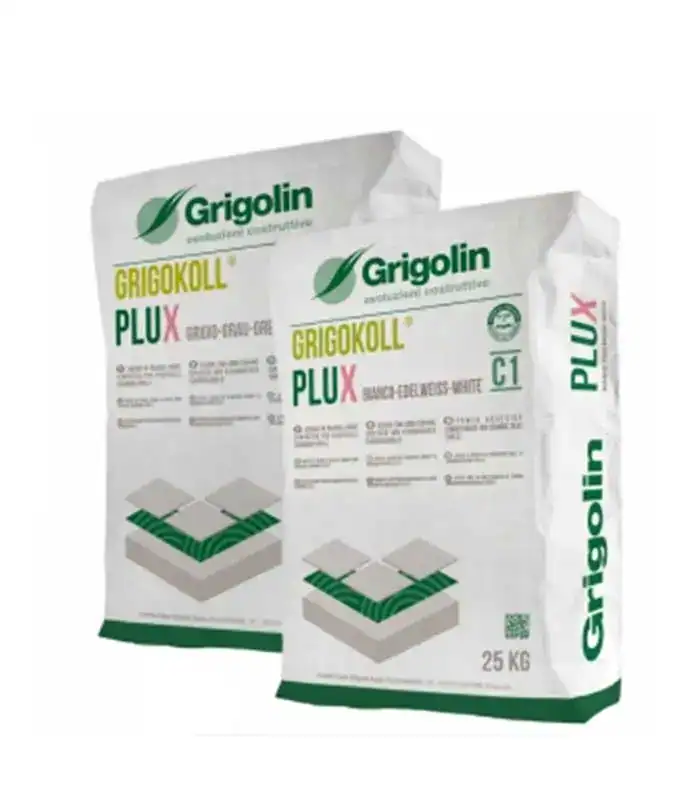
C1: A basic cement-based tile adhesive with a bond strength of at least 0.5 N/mm². Today, this is mainly used indoors, for small, absorbent ceramic tiles, on stable, non-moving substrates.
C2: An upgraded cement-based tile adhesive with a bond strength of at least 1.0 N/mm². This is the basic requirement for modern tiling whenever porcelain tiles, large-format panels, or outdoor surfaces are involved. In this case, bond strength plays a critical role.
T, thixotropy or slip resistance:
A tile adhesive marked T remains stable even on vertical surfaces. This means that heavy wall tiles will not slide down during the curing period. Such stability is essential for precise, attractive work.
E, extended open time:
The E marking refers to an extended open time. Because this type of adhesive forms a skin more slowly, a larger area can be spread at once. This is a huge help to the installer, especially when laying large-format tiles.
F, fast-setting:
A fast-setting adhesive allows the surface to become walkable and ready for grouting within just a few hours. This is often just 3 to 6 hours. This is ideal for urgent repairs or overnight retail renovations. It also works well for projects where waiting days for drying is not an option.
What Is Flexible Tile Adhesive, and When Do You Need an S1 or S2 Rating?
The term flexible, often used loosely, technically refers to deformability. Buildings shift, and tiles expand due to temperature changes, such as with underfloor heating. In any case, the adhesive layer must be able to follow this movement. This is where S-rated tile adhesives come in.
S1, deformable:
This adhesive can absorb a deformation of between 2.5 mm and 5 mm without releasing the tile or cracking. For rooms with underfloor heating, terraces, and large-format porcelain tiles above 60×60 cm, this is the professionally accepted minimum.
S2, highly deformable:
This category can withstand deformation beyond 5 mm. Developed for extreme stress, it is used for oversized slabs and lightweight wall substrates, such as drywall or OSB. It is also used on outdoor facades, where dark-colored tiles can heat up to 70-80°C in the sun.
White Tile Adhesive vs. Gray Tile Adhesive: Where Should Each Be Used?
Many people assume that color is purely aesthetic. In reality, however, significant chemical and functional differences exist between white and gray tile adhesive. These differences determine where each type should be applied.
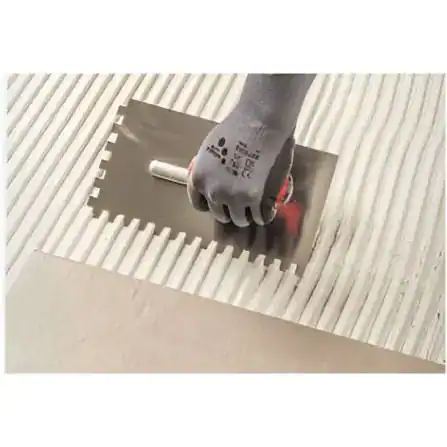
Advantages of white tile adhesive:
Marble and natural stone: White tile adhesive is mandatory for light-colored, porous, or translucent natural stone. Otherwise, gray cement can be absorbed into the stone’s pores and bleed through the surface, causing permanent gray stains.
Glass mosaics and glass tiles: These materials are often transparent. As a result, white tile adhesive ensures that the tile’s color is not distorted by a dark base layer.
Light-colored grout: If you are planning white or cream-colored grout, white tile adhesive is essential. Otherwise, dark gray adhesive residue can discolor the grout lines during cleaning.
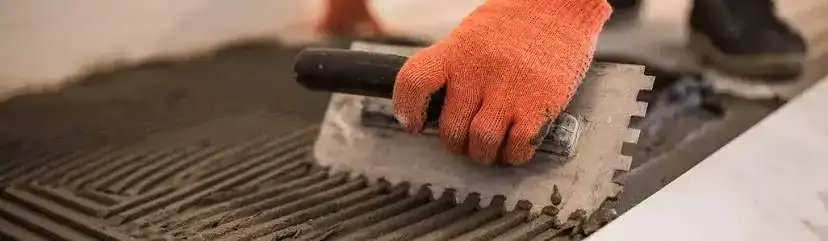
Application of gray tile adhesive:
Gray tile adhesive is a perfect choice for general construction use, darker-toned porcelain tiles, and traditional ceramics. It is generally a more economical solution than white adhesive. As long as the C2TE S1 ratings match, it delivers identical structural performance.
Special Adhesive Types: Epoxy and Dispersion-Based Materials
There are extreme situations where conventional cement-based tile adhesive does not offer enough safety or durability.
Dispersion-based, D1 and D2, tile adhesive:
These are bucket-packaged, ready-to-use, paste-like materials that do not need to be mixed with water. They are mainly recommended for bonding to drywall or existing tile, known as tile-on-tile, in dry indoor spaces. Although this adhesive is extremely flexible, it cannot withstand sustained water exposure, such as in built-in showers.
Reactive resin, R1 and R2, epoxy adhesive:
This is a two-component adhesive that cures through a chemical reaction. Such materials are acid-resistant, alkali-resistant, and completely waterproof. Because they can withstand extreme chemical cleaning, they are used in chemical plants, slaughterhouses, industrial kitchens, and swimming pools. In the residential sector, however, they are used less often due to their high cost and the complexity of application.
Choosing the Right Tile Adhesive Based on Substrate Type
The physical properties of the surface to be tiled, known as the substrate, are decisive. They determine which tile adhesive best suits a given project.
Concrete and cement screed: The substrate must first properly dry and shrink, usually after about 28 days. Once this happens, a quality C2-grade tile adhesive is generally sufficient for installation.
Underfloor heating systems: Here, strictly and exclusively S1- or S2-rated deformable tile adhesive may be used. When the heating is switched on, the layers undergo significant thermal expansion. Consequently, a rigid adhesive bed would crack or release the tile almost immediately.
Drywall and wood-based substrates, such as OSB, tend to vibrate and flex. Because of this, a flexible tile adhesive with an elevated resin content is required for secure bonding. Suitable examples include C2TE S1 or S2.
Outdoor terraces and pools: Due to the risk of frost, achieving 100 percent coverage is the top priority here. As a result, a slurry-bed, or liquid-bed, tile adhesive is often chosen. It spreads beneath the tile and fully eliminates the air pockets where seeping water could freeze.
Why Does Layer Thickness Matter When Applying Tile Adhesive?
It is a serious professional mistake to try to level out a curved wall or an uneven floor. Using the thickness of the tile adhesive alone for this purpose is not acceptable. This practice can lead to severe consequences. Most thin-bed adhesives are designed for a thickness of 3 to 10 mm.
If applied more thickly than this, for example 15 to 25 mm, the material shrinks significantly as it cures. This shrinkage generates significant stress. Consequently, it can pull the tile away from the substrate, or cause stress cracks in the ceramic. If the substrate is not level, a self-leveling compound must be applied first. Only after it has dried can the tile adhesive follow.
Professional Rules for Mixing Tile Adhesive
Even the highest-quality tile adhesive loses its value if it is not mixed correctly. The process must be precise:
- Water dosage: Always add the powder to clean water, never the other way around. Follow the exact water quantity specified by the manufacturer on the back of the bag. While too much water weakens adhesion, too little water reduces workability.
- Mixing time: Use a low-speed mixer to fully homogenize the tile adhesive.
- Resting time: This is the most important step. The mixed material must rest for 3 to 5 minutes so the chemical additives, the polymers, can fully dissolve. Only after a brief re-mix is the adhesive ready for use.
Mistakes a Poorly Chosen Adhesive Can Cause
If the wrong category of material is chosen, the following problems are almost guaranteed to occur:
- Frost damage and detachment: Outdoors, this happens when the adhesive is not frost-resistant or cannot handle thermal expansion.
- Cracked grout lines: If the adhesive is not flexible enough to deform, it fails to follow the building’s movements. As a result, stress escapes through the grout lines, which then crack and pop out.
- Hollow-sounding, loose tiles: This occurs when the wrong adhesive is used for porcelain tile. Insufficient bond strength then causes the tile to separate. As a result, tapping it produces a hollow sound.
Summary: Buying Tile Adhesive Wisely
When shopping, never judge a bag by the shiny marketing text on the front. Instead, look for the standardized marking on the back. This is the only reliable source of information about the material.
indoor ceramic tile: C1T or C2T rated tile adhesive.
porcelain tile, on floors: C2TE rating.
underfloor heating and large tiles: C2TE S1 deformable tile adhesives.
outdoor use and facades: C2TE S2 highly flexible material.
light-colored natural stone: White C2TE S1 tile adhesives.
Using a professional adhesive is the foundation of every successful tiling project. The few thousand forints saved on adhesive can come back to haunt you later. The result can be tearing out the entire tiled surface, with damages worth millions.
Expertise begins with understanding the markings on the material, and then matching the right technology to the right application. Adhesive is the invisible yet indispensable bond that keeps our home beautiful and safe for decades to come.